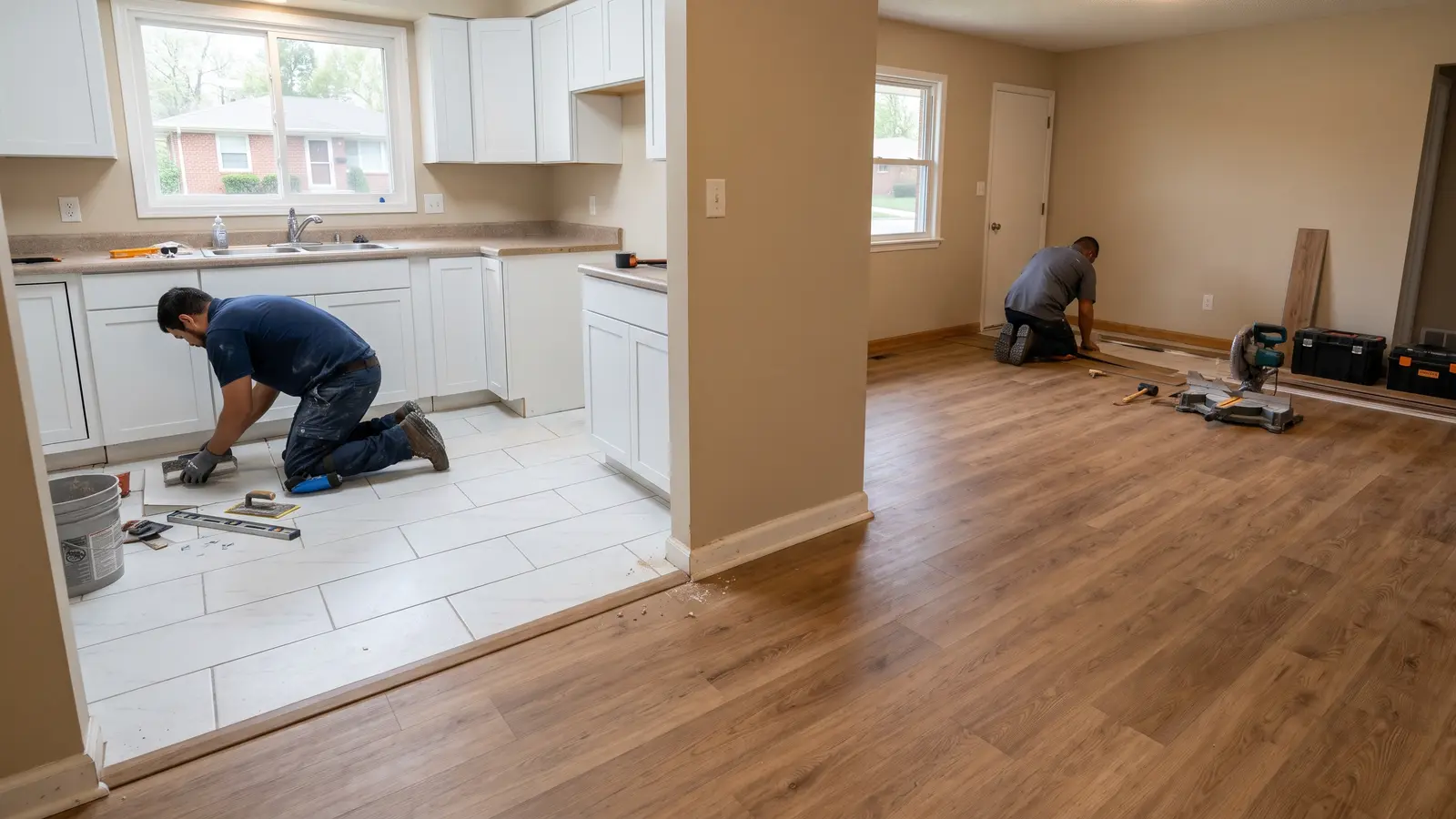
Tile vs. luxury vinyl plank in Wichita
Both tile and vinyl plank handle water, so this choice isn't about whether the floor survives a spill. It's about cost, how long the job takes, how the floor feels and how long it lasts. Here's how they compare in Wichita kitchens, bathrooms, entries and basements.
Get a Free Quote
Fast. Easy. No obligation.
Quick answer
Installed tile runs about $8–$18 per square foot in Wichita and LVP about $4–$9 per square foot. A 200 sq ft kitchen comes to roughly $1,600–$3,600 for tile or $800–$1,800 for LVP. LVP usually goes in within a day or two. Tile takes two to four days with mortar and grout cure time.
Option A
Tile Flooring
Porcelain or ceramic tile set in mortar over a cement board, uncoupling membrane or slab, with grout between the tiles.
Option B
Luxury Vinyl Plank (LVP)
Wood-look or stone-look vinyl planks, usually with a rigid core, that click together and float. Waterproof core, no grout.
| Tile Flooring | Luxury Vinyl Plank (LVP) | |
|---|---|---|
| Installed cost in Wichita | About $8–$18 per square foot | About $4–$9 per square foot |
| Typical install time | Two to four days with cure time | One to two days for most rooms |
| Water | Fully waterproof surface; grout needs care | Waterproof core; standing water can get under edges |
| Feel underfoot | Hard and cool; tiring for long kitchen sessions | Softer and warmer |
| Durability | Very hard; won't scratch, but dropped items can crack it | Resists daily wear; can scratch or gouge |
| Lifespan | Decades when the subfloor is solid | Until the wear layer wears through |
| Cleaning | Easy surface; grout lines collect dirt | Sweep and damp mop |
| Good fit for | Bathrooms, showers, entries, mudrooms, long-term kitchens | Kitchens, basements, open living areas, quick turnarounds |
Why does tile cost so much more than LVP?
Mostly labor and prep. A mid-range porcelain tile and a mid-range vinyl plank can cost about the same per square foot as material. The gap comes from installation. Tile installation means preparing a rigid base, laying out the pattern, cutting each tile, setting it in mortar, waiting for it to cure, then grouting and cleaning. LVP installation clicks together and floats, so it moves much faster.
Layout also matters. Large-format tile, herringbone or diagonal patterns take more cutting and more extra material (often more than the usual 5–10% overage), which pushes tile toward the top of its $8–$18 per square foot range. A simple straight-lay LVP floor sits near the low end of its $4–$9 range.
What is the 1/3 offset rule for tile and plank?
It's a layout guideline for rectangular tile and long planks. Stagger each row by no more than about a third of the piece's length. With long porcelain tile, a 50% offset lines up the slight bow most long tiles have, which causes lippage (edges sitting higher than their neighbors). A third offset avoids that and still looks random enough.
LVP has its own version: keep end joints at least several inches apart from row to row and avoid a repeating stair-step pattern. Either way, a careful layout is a big part of why one floor looks custom and another looks rushed.
Which is better for Wichita basements and wet areas?
Both can go on a basement slab, and both are common in Wichita basements. Tile bonds directly to concrete and doesn't care about moisture, but it's cold and hard on a slab, and any cracks in the concrete can telegraph up through the tile without a membrane. LVP floats over a vapor barrier, feels warmer and costs less for large areas, which is why it's the more common basement flooring pick here.
In bathrooms, tile still has the edge, especially around tubs and showers, where water sits on the floor regularly. In a kitchen or laundry room, either works, and the choice comes down to budget, comfort and look.
How does tile hold up with pets, kids and Kansas weather?
Tile is about as tough as a floor gets against dog claws, wet boots and the dirt tracked in from Kansas yards. It won't scratch. The weak spots are grout, which can stain if it isn't sealed (or isn't epoxy grout), and cracking, if something heavy drops or the subfloor flexes. Tile is also hard on dropped dishes and on young knees.
LVP is quieter, softer for kids playing on the floor and easier on joints if you stand in the kitchen a lot. Deep scratches from heavy furniture or big dogs are possible, so felt pads help. Kansas humidity swings barely affect tile. LVP moves slightly with temperature, so it needs a small gap at the walls hidden under trim.
What about the subfloor in older Wichita homes?
Tile needs a stiff floor. Many older Wichita homes, including 1950s and 1960s houses in Crown Heights or Linwood, have wood subfloors over joists that flex a little, and tile set over a bouncy floor tends to crack along grout lines. Sometimes that means adding a layer of backer or reinforcing the floor. If the work goes into joists or structural framing, we check with MABCD before starting.
LVP is more forgiving of a slight flex, but it needs a flat surface. We check both during the free measure and price any subfloor repair in writing.
The verdict
Choose tile for bathrooms, shower areas, entryways and mudrooms, and for kitchens in a home you plan to keep for a long time. It costs more and takes longer, but it's extremely durable.
Choose LVP for kitchens, basements, laundry rooms and open living areas when you want a waterproof floor that's warmer, quieter and about half the cost. Many Wichita homes use tile in the bathrooms and LVP everywhere else. Request a free in-home measure and we'll price both in writing.
Related services
Questions people ask
Is LVP cheaper than tile?
Yes, usually by about half. Installed LVP runs about $4–$9 per square foot in Wichita, and tile about $8–$18.
Is tile or LVP better for resale?
Tile in bathrooms tends to read as higher quality to buyers. In kitchens and living areas, quality LVP is widely accepted in Wichita listings.
Can LVP go over existing tile?
Often yes, if the tile is flat and firmly bonded and the grout lines aren't deep. We may skim-coat the grout lines first. Loose or cracked tile comes out.
Does tile need to be sealed?
Porcelain and ceramic tile don't, but cement-based grout does need periodic sealing. Epoxy grout doesn't need sealing.
Do I need a permit to replace a tile floor?
Replacing a floor covering usually doesn't need one. If the job involves structural subfloor or joist work, we check with MABCD (316-660-1840) first.
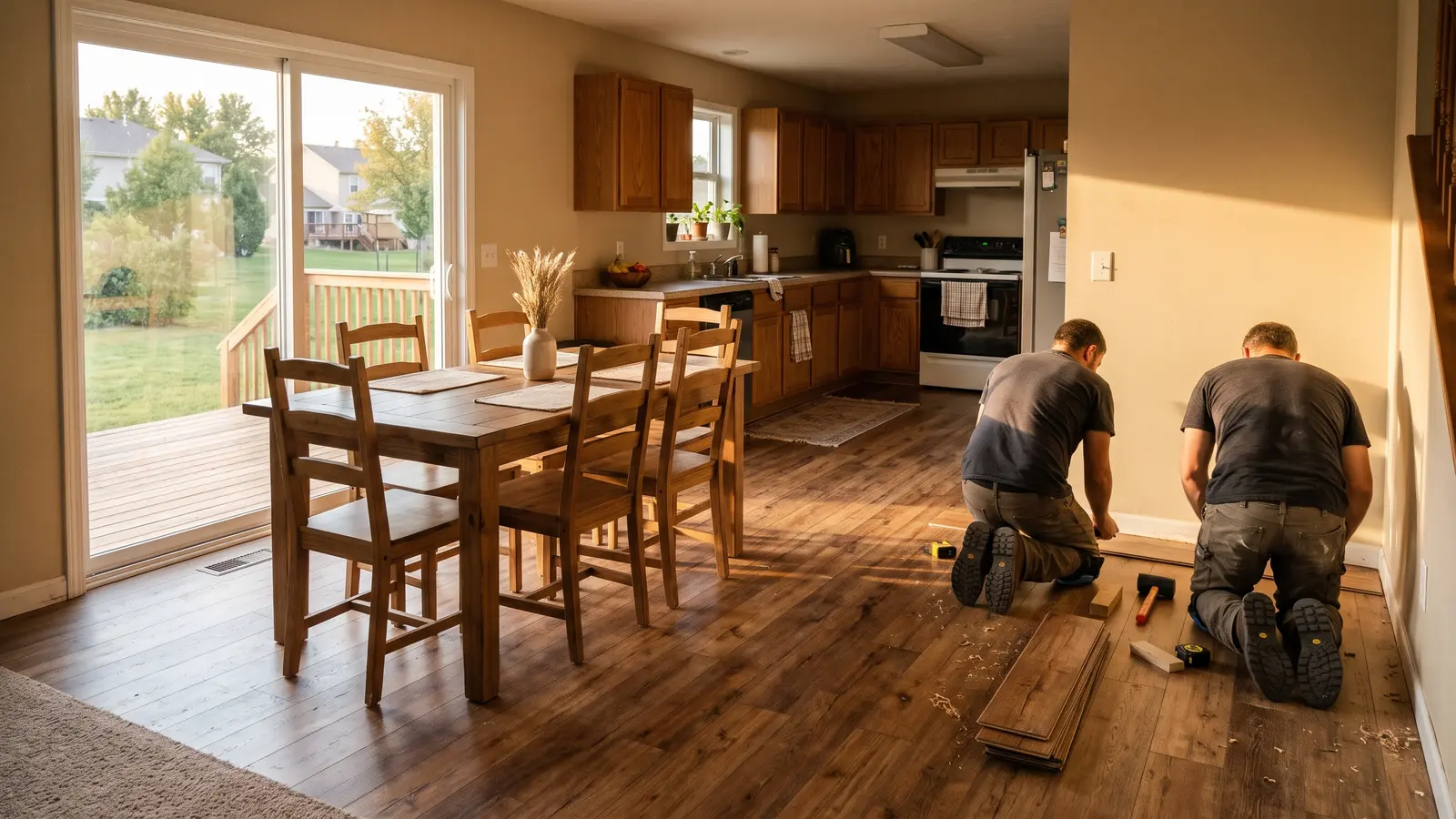
Ready for Floors You Like Walking On?
Worn carpet and scratched floors don't get better with time. Get a free measure and a written price you can count on.
- Calls answered 24/7
- Free, written estimates
- Wichita & nearby