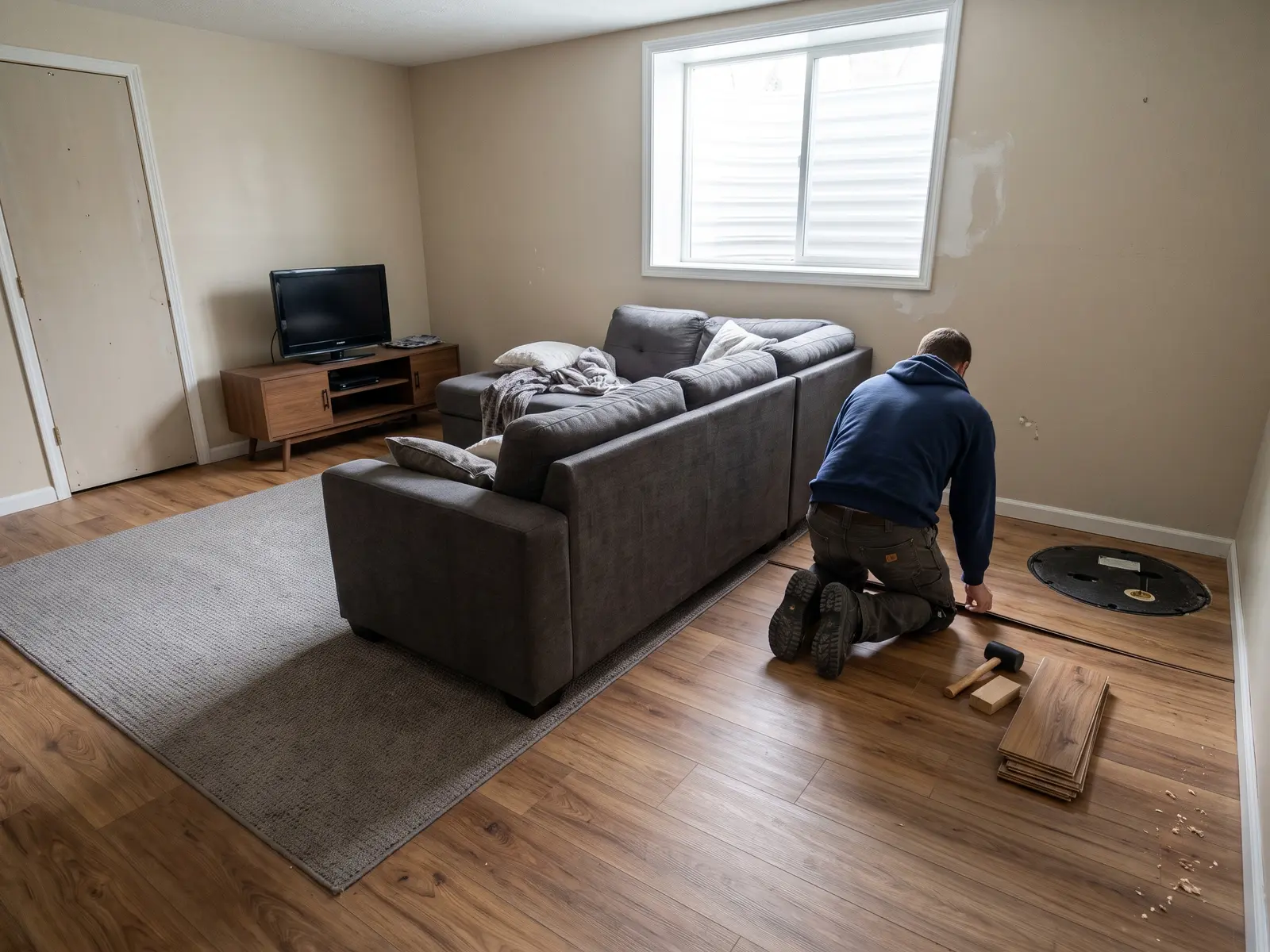
Basement Flooring Installation in Wichita, KS
Basements are common around Wichita, and they're one of the trickiest rooms to floor. The concrete slab sits below grade, so it can wick moisture up from the soil, and it's rarely flat. We test the slab, fix what needs fixing and put down a floor that won't mind a damp spring or a little water on the floor.
- Slab moisture tested before we quote
- Waterproof LVP and porcelain tile
- Cracks and low spots leveled first
- Free in-home measure and written quote
Get a Free Quote
Fast. Easy. No obligation.
Quick answer
Basement flooring in the Wichita area usually runs $4–$10 per square foot installed. A 600 sq ft basement family room often totals about $2,400–$6,000, depending on the floor you pick and how much slab prep it needs. Most basements take one to three days to install after we test the concrete for moisture.
How much does basement flooring cost in Wichita?
Most basement floors we quote around Wichita and Sedgwick County land between $4 and $10 per square foot installed.
| Floor type | Typical installed range | Notes |
|---|---|---|
| Luxury vinyl plank | Lower to middle of the range | Waterproof core, floats over the slab with a pad |
| Carpet rated for basements | Lower to middle | Synthetic fiber with a moisture-resistant pad |
| Porcelain tile | Middle to top | Bonded to the slab, handles water well |
| Engineered wood rated below grade | Top of the range | Only certain products, with a vapor barrier |
As a sample, a 600 sq ft basement family room comes to roughly $2,400–$6,000. An 800 sq ft open basement is about $3,200–$8,000. Pulling up old carpet or glued-down tile adds removal cost, and a slab with deep dips or a crack that needs patching adds prep time. Basement stairs are priced per step.
For prices across every floor type, see the Wichita flooring cost guide.
What's the right flooring for a Wichita basement?
The floor has to tolerate moisture. Concrete is porous, and even a dry-looking slab passes some water vapor. That rules some materials out and makes others an easy choice.
- Luxury vinyl plank (LVP) is what we install most often in basements. The core doesn't swell, it floats over minor slab flaws and it feels warmer underfoot than tile. See LVP installation.
- Porcelain tile is the choice for basements that have ever taken on water, or for a basement bath, laundry or bar area. It can sit in water and dry out with no harm. See tile floor installation.
- Carpet works in a basement bedroom or theater room when it's a synthetic fiber over a pad made for concrete. See carpet installation.
- Engineered hardwood is possible only when the product is rated for below-grade use.
- Solid hardwood isn't a good fit below grade. It cups and gaps with the moisture swings.
- Laminate is generally not recommended unless the product is specifically rated for basements, since its fiberboard core can swell.
How do you check a basement slab for moisture?
Before we quote a basement, we look for signs of water: white mineral deposits on the concrete, stains along the walls, a musty smell and rust on the bottoms of metal posts. Then we test the slab itself, usually with a moisture meter and, when the reading is borderline, a longer test left in place for a day or more.
If the slab reads dry or only slightly damp, LVP or tile can go down with the right underlayment or barrier. If it's wet, flooring isn't the first fix. Water usually traces back to gutters, downspouts or grading that sends rain toward the foundation, and that needs to be handled first. We'll tell you what we see so you don't put a new floor over an ongoing problem.
Kansas weather matters here too. Humid summers can make a basement feel damp even when the slab is fine. Running a dehumidifier during the warm months helps any floor you choose.
Do you have to level a basement floor before installing flooring?
Usually some, yes. Basement slabs often slope toward a floor drain and have humps, dips and cracks from settling. LVP and laminate makers list a flatness tolerance, and large-format tile needs an even flatter surface.
We grind down high spots, fill low spots with patch or self-leveling compound and fill cracks so they don't telegraph through. Around a floor drain, we keep the slope so water still reaches it. Prep work like this is part of our subfloor repair and floor prep service, and it's priced on its own line in the quote so you can see it.
In older Wichita homes, basement floors sometimes still have 9x9 vinyl tile glued to the concrete. That tile and its black adhesive can contain asbestos. We test or arrange testing before we disturb it, and if it's positive we often float the new floor right over the top instead of tearing it out.
Tile or LVP in the basement?
Both handle moisture well. LVP is quicker to install, costs less, feels warmer and quieter, and floats over small slab flaws. Tile is the more durable option and the one we'd pick if your basement has flooded before, since it can be cleaned and dried in place. Many homeowners in Andover, Maize and Derby choose LVP for the main basement room and tile for the bathroom or laundry. Our tile vs. LVP comparison goes deeper.
How long does basement flooring take, and is a permit needed?
Most basement floors take one to three days to install, depending on size, prep and material. Tile and leveling compound need drying time, which can add a day. If LVP is going in, the planks need a day or two to acclimate in the basement before we start.
Replacing basement flooring usually doesn't need a permit. In Wichita and Sedgwick County, permits go through the Metropolitan Area Building and Construction Department (MABCD). If your job involves structural subfloor or joist work, we check with MABCD before that part starts. Our installation timeline guide has more on scheduling.
Our process
How basement flooring works with us
- 1
Moisture check
We look for water signs and test the slab before recommending a floor.
- 2
Written quote
Removal, slab prep, barrier, flooring and stairs each on their own line.
- 3
Prep the slab
High spots ground, low spots and cracks filled, drain slope kept.
- 4
Install & walkthrough
Floor installed, trim and transitions finished, then a walkthrough with you.
Compare your options
Costs & planning
Related services
Basement Flooring questions
What is the cheapest flooring for a basement?
Basic LVP or basement-rated carpet usually costs the least to install. Both sit near the lower end of our $4–$10 per square foot range when the slab needs little prep.
Can I put hardwood in my basement?
Not solid hardwood. Some engineered hardwood is rated for below-grade use with a vapor barrier, but LVP or tile is usually the safer pick.
Does LVP need a moisture barrier on concrete?
Most makers call for one over concrete unless the plank has an attached pad that includes it. We follow the product's install instructions.
Can flooring go over a basement floor drain?
No. We cut the floor around the drain and keep the slab slope so water can still reach it.
What if my basement has flooded before?
We'd steer you toward porcelain tile, and we'd want the water source fixed first. Gutters, downspouts and yard grading are common culprits.
Ready for Floors You Like Walking On?
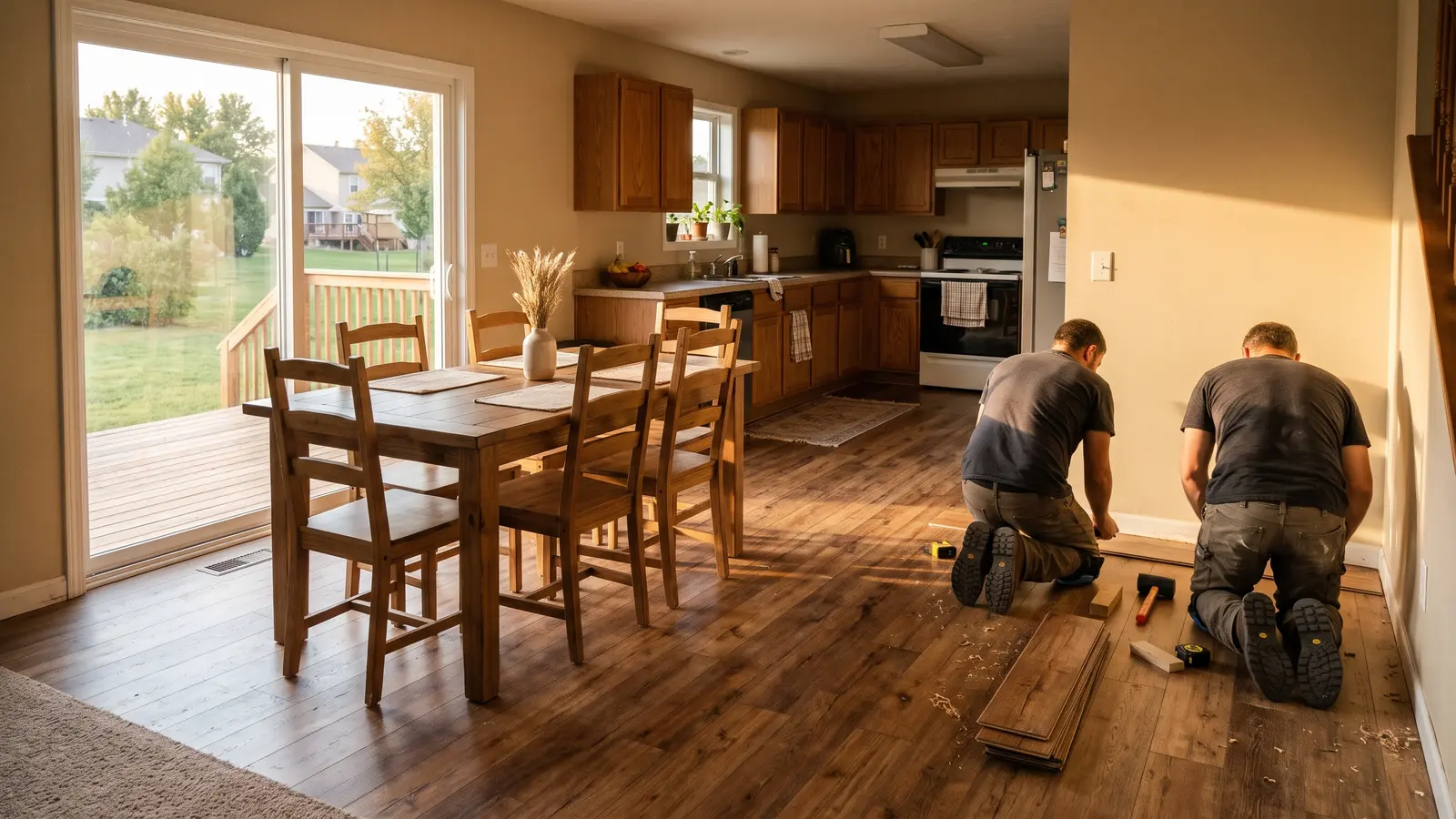
Worn carpet and scratched floors don't get better with time. Get a free measure and a written price you can count on.
- Calls answered 24/7
- Free, written estimates
- Wichita & nearby