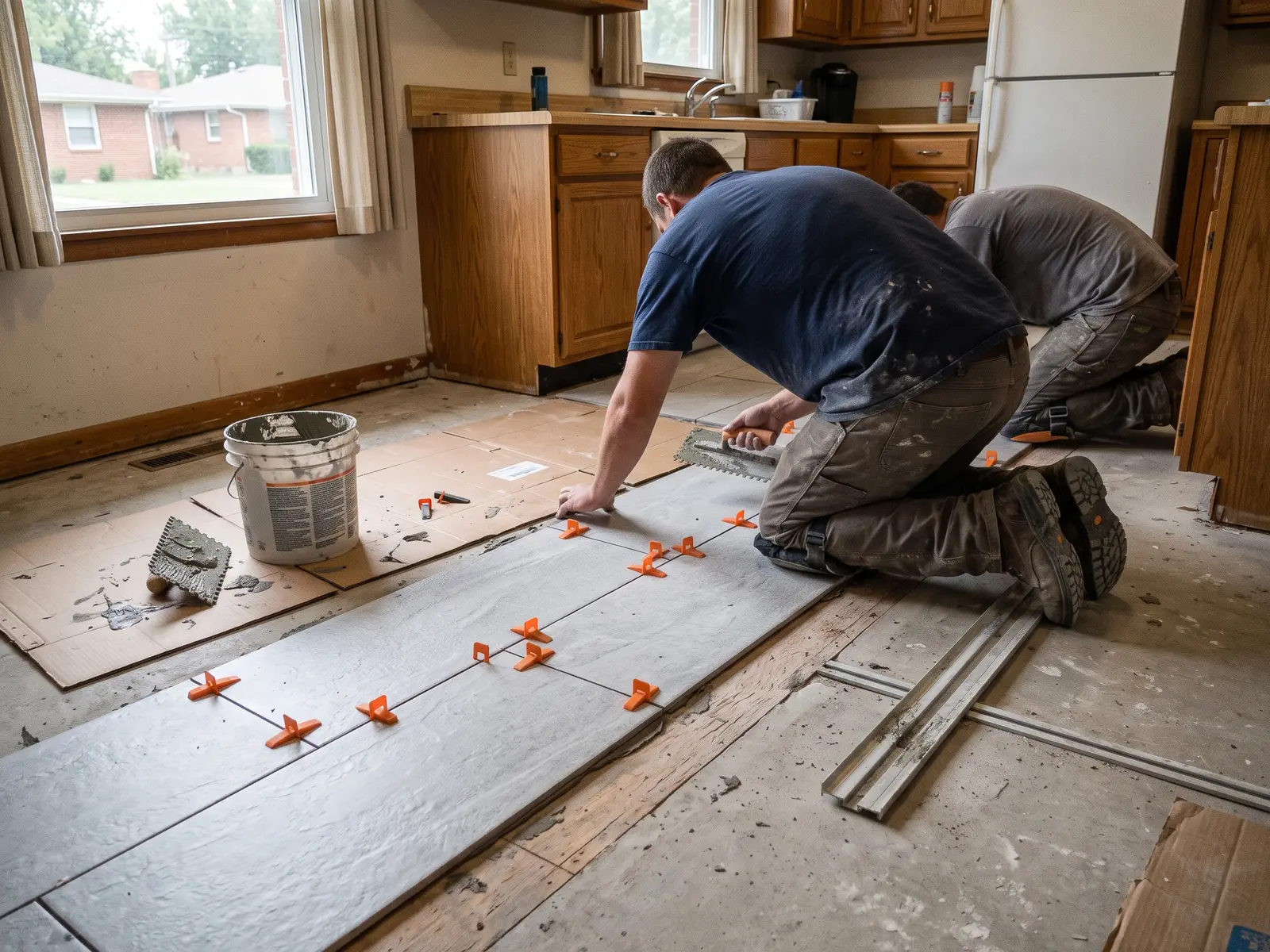
Tile Floor Installation in Wichita, KS
Tile is the floor we suggest when a room sees water, mud or heavy traffic. Porcelain shrugs off spills, pets and wet boots, and it handles Wichita basements without fuss. The tile itself is only half the job, though. A tile floor lasts when the base under it is flat, stiff and clean, so that's where we spend our time.
- Porcelain, ceramic and stone-look tile
- Subfloor checked for flatness and stiffness
- Install tile you bought or tile we source
- Free in-home measure and written quote
Get a Free Quote
Fast. Easy. No obligation.
Quick answer
Tile floor installation in the Wichita area usually runs $8–$18 per square foot installed. A 150 sq ft bathroom or laundry room often lands around $1,200–$2,700. Most rooms take two to four days: one for removal and prep, one or two for setting tile, then grout. Plan on light foot traffic for a day after grouting.
How much does tile floor installation cost in Wichita?
Most tile floors we quote around Wichita and Sedgwick County fall between $8 and $18 per square foot installed, including setting materials, grout and labor.
| Job | Lower end | Higher end |
|---|---|---|
| Tile | Basic ceramic, 12x12 | Large-format or wood-look porcelain |
| Layout | Straight lay | Diagonal, herringbone or a border |
| Base | Sound subfloor, ready to tile | Old floor removed, backer board added, low spots filled |
| Room | Open kitchen, few cuts | Small bath with a toilet, tub and vanity to cut around |
Some sample totals: a 150 sq ft hall bath at $8–$18 is about $1,200–$2,700. A 300 sq ft kitchen and breakfast nook is roughly $2,400–$5,400. Removing old tile is slower than pulling vinyl or carpet, and it often adds $1–$3 per square foot on its own.
Small rooms cost more per square foot than big ones. A 40 sq ft powder room has nearly as many cuts as a kitchen, plus the toilet comes off and goes back on. For the bigger picture across materials, see our Wichita flooring cost guide.
Can I buy my own tile and have you install it?
Yes. Plenty of homeowners pick tile out at a big-box store or a local flooring shop and hire us to set it. We're installers, not a showroom, so that works fine for us. We can also source tile for you if you'd rather not shop.
If you're buying your own, a few tips:
- Buy 10% extra for a straight lay and about 15% for diagonal or herringbone. Cuts and the odd broken piece add up.
- Buy from the same lot. Color and size can shift slightly between production runs.
- Check the rating. Floor tile should be rated for floors. Some wall tile is too soft or slick underfoot.
- Send us the size first. Very large tiles (24x48 and up) need a flatter floor and sometimes a leveling system, which changes the quote.
What goes under a tile floor?
Tile is rigid, so it cracks if the floor beneath it bends or rocks. On a wood subfloor, we screw down cement backer board or an uncoupling membrane over the plywood, then set tile in thinset. On a concrete slab or basement floor, tile can often go straight onto the concrete once it's clean and flat, with a membrane over any existing cracks.
Before we quote, we check three things. First, flatness: large tile shows every dip. Second, stiffness: a bouncy floor over long joist spans needs added support or a thicker underlayment. Third, moisture, especially in basements and around old toilets.
If the subfloor is soft, stained or patched, we fix it first. That work is covered on our subfloor repair and floor prep page. Older Wichita homes sometimes have vintage 9x9 vinyl tile under the top layer, and that tile or its black adhesive can contain asbestos. We test or arrange testing before we disturb it.
What is the 1/3 offset rule for tile?
Rectangular tiles, like 12x24 porcelain or wood-look planks, are rarely perfectly flat. Most have a slight bow in the middle. If you stagger them at the halfway point, the high center of one tile sits next to the low end of another, and you get lippage: edges that catch a sock or a fingertip.
The fix is to stagger the joints by no more than about one-third of the tile's length. It hides the bow, keeps the floor flatter and avoids a stair-step pattern. Many tile makers print a recommended offset on the box, and we follow it. For a straight square tile, a grid layout works fine.
We also plan the layout so you don't end up with a thin sliver of tile at a doorway or along the most visible wall. That usually means starting from the center of the room, not the corner.
Tile or LVP: which fits your room?
Both work in kitchens, baths and basements. Tile is harder, colder underfoot and more expensive to install, but it lasts for decades and doesn't mind standing water, pet accidents or a dropped cast-iron pan. LVP is warmer, quieter, quicker to put in and easier on the budget.
In a lot of Wichita ranch homes from the 1960s through the 1980s, we see tile in the entry and bathrooms and LVP or carpet in the living areas. That mix works well. For a side-by-side look, read tile vs. LVP. If the room is below grade, our basement flooring page covers moisture and slab prep in more detail.
How long does tile installation take, and is a permit needed?
A typical bathroom or laundry room takes two to three days. A kitchen with tile removal can take three to five. Thinset needs to set before grouting, and grout needs time before heavy traffic or furniture goes back. We tell you in the quote when you can walk on it and when the appliances can go back in.
Replacing floor tile usually doesn't need a permit. If the job turns up rotted subfloor or damaged joists that need structural repair, we check with the Metropolitan Area Building and Construction Department (MABCD) before that part of the work. Our installation timeline guide has more detail.
Our process
How tile floor installation works with us
- 1
Measure & check the base
We measure, check flatness and bounce, and look for moisture or old flooring.
- 2
Written quote
Removal, prep, tile, setting materials and labor each on their own line.
- 3
Prep & set tile
Old floor out, backer or membrane down, tile set level and spaced.
- 4
Grout & walkthrough
Grout, trim and transitions finished, then a walkthrough with you.
Compare your options
Costs & planning
Related services
Tile Floor Installation questions
How much does it cost to tile a bathroom floor in Wichita?
Usually $8–$18 per square foot installed. A small 50 sq ft hall bath often lands toward the top of that range per foot because of all the cuts around the toilet, tub and vanity.
Is porcelain or ceramic tile better for floors?
Porcelain is denser and absorbs less water, so we lean toward it for entries, basements and busy kitchens. Floor-rated ceramic works well in lower-traffic rooms and costs a bit less.
Can tile go over my existing floor?
Sometimes over old tile that's flat and firmly bonded, but it raises the floor height at doors and transitions. Over vinyl or laminate, we remove the old floor first.
How soon can I walk on a new tile floor?
Light foot traffic is usually fine about 24 hours after grouting. We'll give you a specific time for furniture and appliances based on the setting materials used.
Do I need to seal porcelain tile?
Glazed porcelain doesn't need sealing, but cement grout often does. We'll tell you which grout we're using and whether it needs a sealer.
Ready for Floors You Like Walking On?
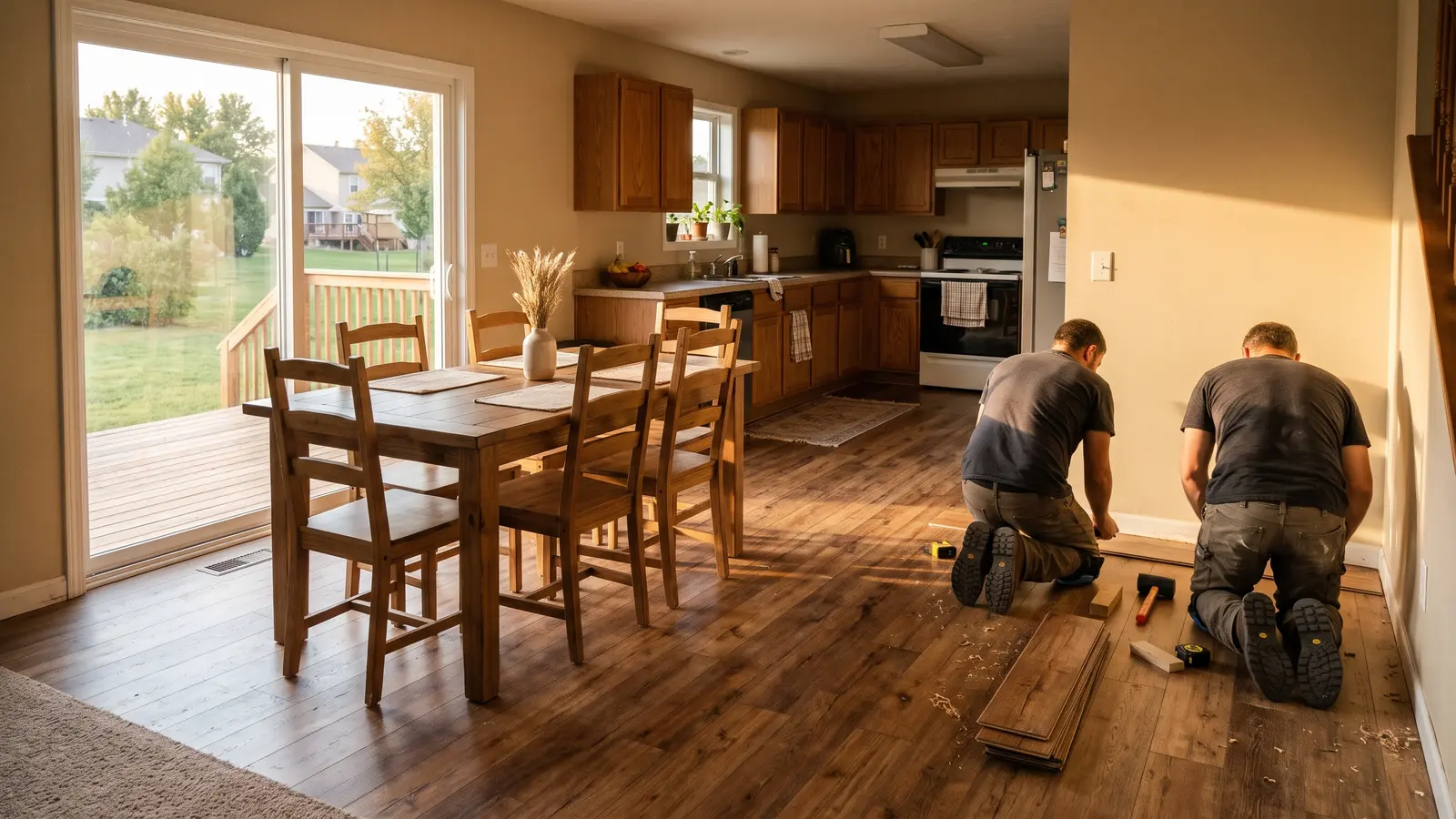
Worn carpet and scratched floors don't get better with time. Get a free measure and a written price you can count on.
- Calls answered 24/7
- Free, written estimates
- Wichita & nearby