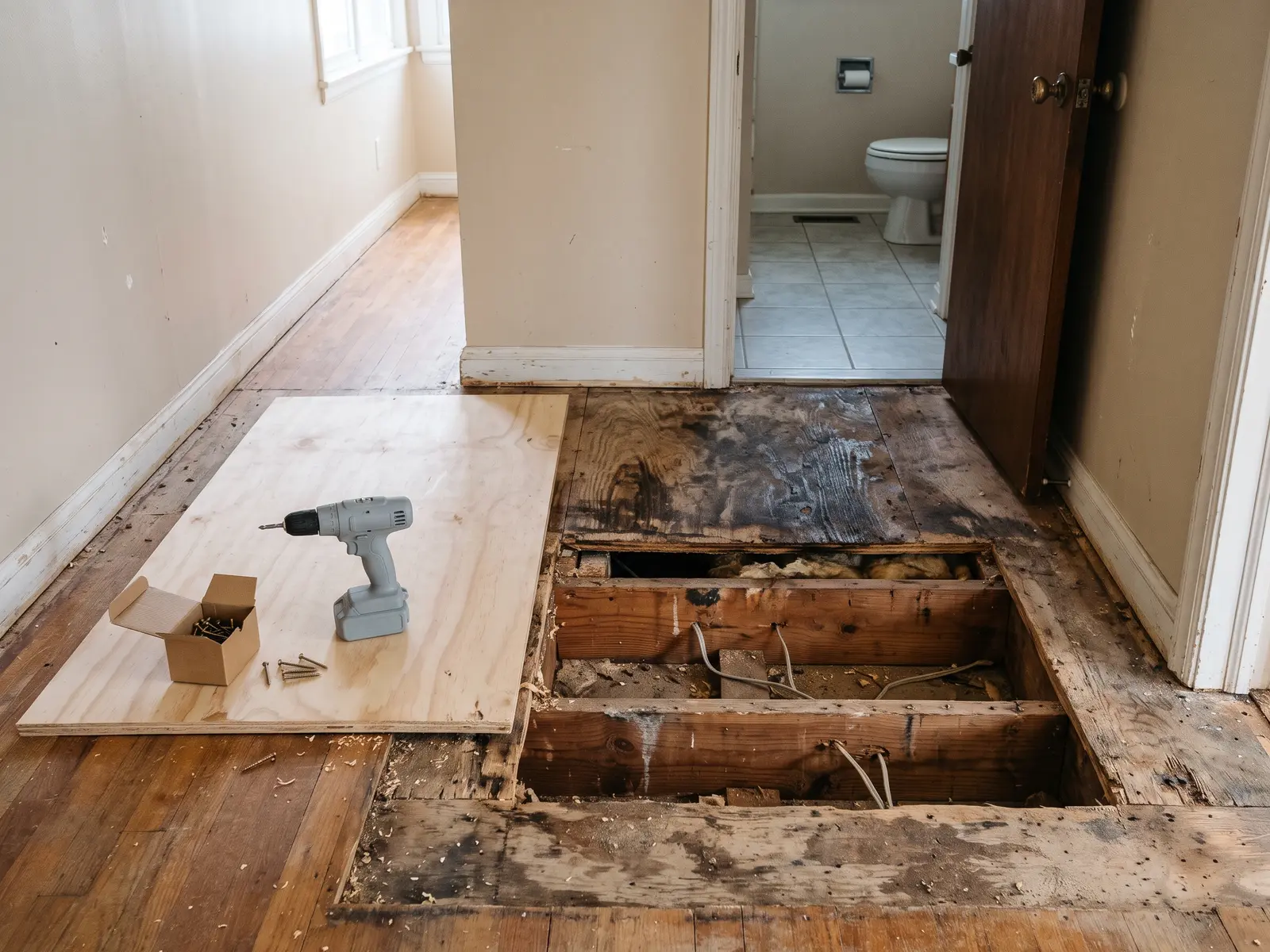
Subfloor Repair & Floor Prep in Wichita, KS
A new floor is only as good as what's under it. Soft plywood, a dip by the tub, a hump over a joist or a squeak you've stepped around for years will show through LVP, crack tile and loosen laminate joints. We fix the subfloor first, usually on the same visit as the install, so the new floor starts flat and solid.
- Soft and water-damaged plywood replaced
- Squeaks screwed down, humps and dips leveled
- Done before your new floor goes in
- Free in-home check and written quote
Get a Free Quote
Fast. Easy. No obligation.
Quick answer
Subfloor repair and floor prep in the Wichita area usually costs $300–$2,500 per job. Re-screwing squeaks or patching one soft spot sits near the low end; replacing water-damaged plywood in a bathroom or leveling a whole room sits near the high end. Most repairs add a few hours to one day before new flooring goes in.
How much does subfloor repair cost in Wichita?
Most subfloor repair and prep jobs around Wichita and Sedgwick County fall between $300 and $2,500. It's priced by the job, not per square foot, because the work depends on what we find.
| Repair | Typical cost |
|---|---|
| Re-screwing squeaks and loose spots in a room | Low end of the range |
| Patching one soft spot (by a toilet or doorway) | Low to middle |
| Leveling low spots with patch or self-leveler | Middle |
| Replacing water-damaged plywood in a bathroom or kitchen | Middle to high end |
| Leveling or replacing subfloor across a full room | High end |
On a combined job, this cost is added to the flooring price. For example, if you're putting LVP in a kitchen and part of the floor by the sink is soft, the quote shows the LVP per square foot, then the subfloor patch as its own line. If it turns out the joists themselves are damaged, that's a bigger repair and we'll price it separately.
What are signs of a bad subfloor?
Most homeowners notice it before they know what it is. Common signs:
- A soft or spongy spot, often near a toilet, tub, dishwasher, refrigerator ice line or an exterior door.
- Squeaks or popping when you walk across a room.
- A visible dip or hump you can see when you lay a straightedge or a long level on the floor.
- Cracked tile or grout in a line, or vinyl and laminate seams that keep opening.
- Stains, a musty smell or dark wood when you peek at the subfloor from a basement or crawlspace.
Any one of these is worth a look before new flooring goes down. Covering a soft spot with new planks only hides it for a while.
Do I need to level my floor before installing new flooring?
Usually some leveling is needed. Floating floors like laminate and LVP have a flatness tolerance in their install instructions, and tile, especially large-format tile, needs a flatter base still. Carpet hides a lot, which is why older floors often look fine until the carpet comes up.
How we level depends on the problem:
- High spots on a wood subfloor get sanded or planed down. On concrete, we grind them.
- Low spots get filled with floor patch or a self-leveling compound.
- A hump over a joist sometimes needs the subfloor loosened and re-fastened.
- A slope across the whole room may call for leveling from below at the joists, which is structural work.
Concrete slabs in basements and slab-on-grade homes have their own prep needs, covered on our basement flooring page.
What do you find under old floors in Wichita homes?
It depends on the age of the house. In 1940s to 1960s homes in Riverside, College Hill, Crown Heights and Sleepy Hollow, we often find original oak hardwood under carpet, laid over diagonal plank subfloor. If the oak is in good shape, refinishing it may make more sense than covering it.
In 1960s to 1980s ranch homes, we commonly see particleboard underlayment in kitchens and baths. It swells and crumbles when it gets wet, so we often replace it with plywood before tile or LVP. Newer homes in Andover, Maize, Goddard and Bel Aire usually have OSB subfloors that are in good shape apart from the occasional squeak or toilet leak.
Older homes can also have layers of old vinyl. Some vinyl tile and its adhesive (especially 9x9 tiles) can contain asbestos, and homes built before 1978 may have lead paint on trim and baseboards. We test or arrange testing before we disturb suspect material, and we'll explain your options before any of it comes up.
Does subfloor repair need a permit?
Patching or replacing subfloor sheathing as part of a flooring job usually doesn't. Work on the structure itself is different. If we find damaged joists, sagging framing or rot that goes beyond the plywood, we check with the Metropolitan Area Building and Construction Department (MABCD) before doing that part of the work. In Wichita and Sedgwick County, MABCD handles building permits and can be reached at 316-660-1840.
How long does subfloor repair take?
Re-screwing squeaks or patching a single soft spot often takes a few hours and happens the same day as the new floor. Replacing plywood across a bathroom or leveling a full room with self-leveler can take one day, since the compound needs time to cure before flooring goes over it. Our installation timeline guide shows how prep fits into the full schedule, and the Wichita flooring cost guide covers the rest of the budget.
Our process
How subfloor repair & floor prep works with us
- 1
Check the floor
We walk the room, check flatness and look at the subfloor from below when we can.
- 2
Written quote
Each repair priced on its own line, separate from the new flooring.
- 3
Repair & level
Bad plywood out, new sheathing screwed down, low spots filled, squeaks fixed.
- 4
Ready for flooring
We confirm the floor is flat and solid before the new floor goes down.
Compare your options
Costs & planning
Related services
Subfloor Repair & Floor Prep questions
How much does it cost to replace a subfloor in a bathroom?
Around Wichita, replacing damaged plywood in a typical bathroom often lands in the middle to upper part of our $300–$2,500 range. The toilet comes up and goes back down as part of the job.
Can you fix a squeaky floor without removing it?
Sometimes, from below in a basement or crawlspace, or with special screws through carpet. If you're replacing the floor anyway, it's easiest to fix squeaks once the old floor is up.
What should I put down before installing hardwood?
A clean, flat, dry plywood or OSB subfloor, then the underlayment the hardwood maker calls for. We check moisture in both the subfloor and the wood before nailing.
Can new flooring go over a damaged subfloor?
It shouldn't. Soft or uneven spots will flex, which leads to cracked tile, broken plank joints and squeaks.
Will I know about subfloor problems before you start?
We look during the free measure, but some damage only shows once the old floor is up. If we find more, we stop, show you and price it in writing before continuing.
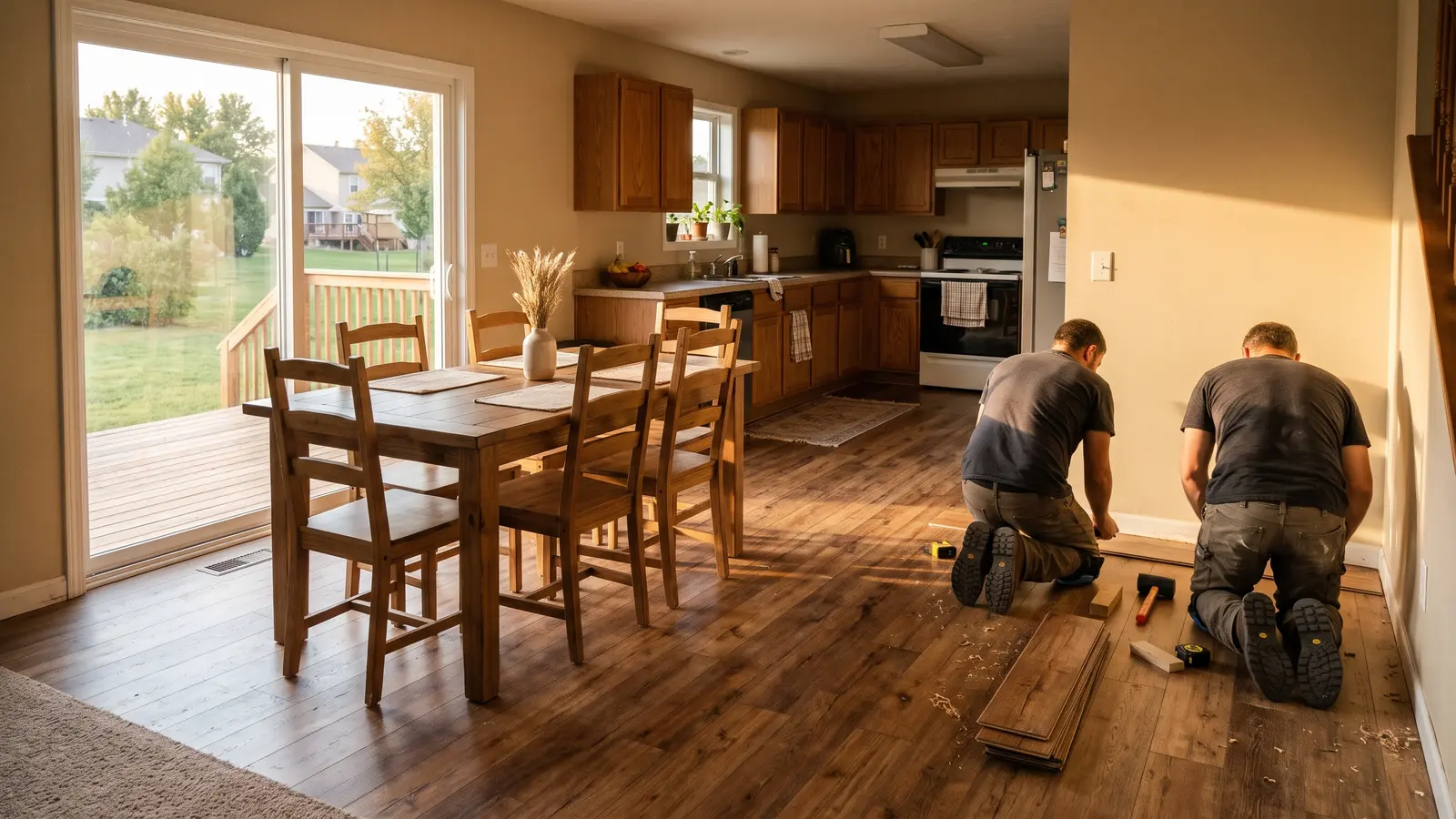
Ready for Floors You Like Walking On?
Worn carpet and scratched floors don't get better with time. Get a free measure and a written price you can count on.
- Calls answered 24/7
- Free, written estimates
- Wichita & nearby