How much does hardwood refinishing cost in Wichita?
Refinishing typically costs $3 to $6 per square foot in the Wichita area. A common 300 to 500 square foot area, like a living room, dining room and hall, often lands around $1,000 to $2,500. These are ballparks based on published 2025–2026 flooring cost data. Your price moves with the condition of the wood, stain versus a clear finish, the number of coats, repairs, stairs and how much furniture has to be moved.
A full refinish means sanding the old finish off down to bare wood, filling gaps or nail holes where needed, applying stain if you want a new color, and putting down several coats of protective finish.
What does refinishing cost by room?
| Area | Approx. size | Typical range |
|---|---|---|
| Single bedroom | 150 sq ft | $450–$900 |
| Living room | 300 sq ft | $900–$1,800 |
| Living, dining and hall | 500 sq ft | $1,500–$3,000 |
| Most of a main floor | 800 sq ft | $2,400–$4,800 |
Small jobs often have a minimum, because setting up sanders and dust control takes the same time for one room as for three. Doing every connected room at once also keeps the finish color even from room to room.
What pushes a refinishing quote up?
Stain. A clear finish over natural oak is simplest. Stain adds a step and drying time, and dark colors show sander marks more, so they take extra care.
Repairs. Replacing cracked, rotted or deeply stained boards means weaving in new pieces that match the old ones. Wider oak and older milling can be harder to match.
Stairs. Treads and risers are sanded largely by hand and priced per step.
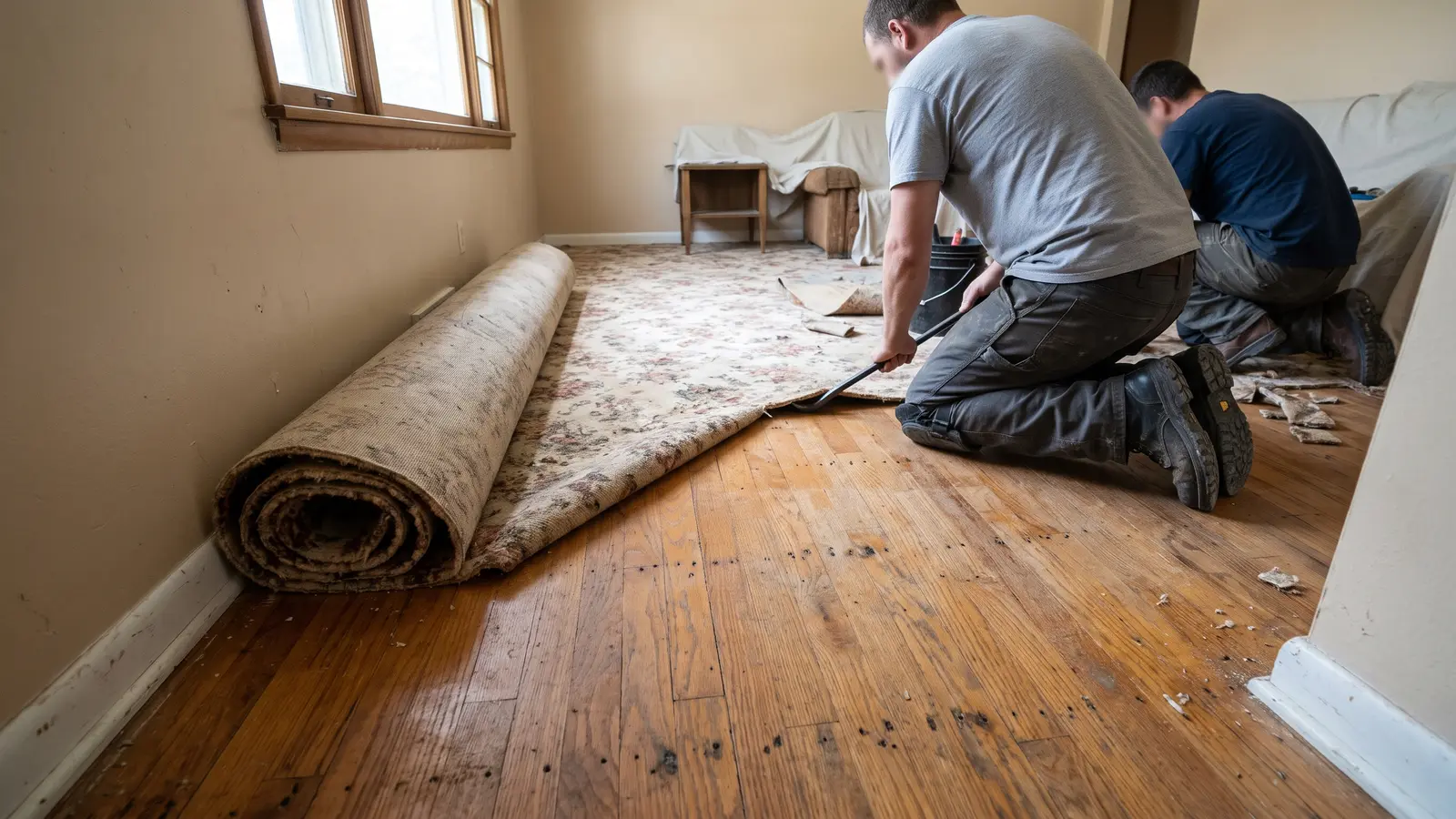
Removing carpet first. If the oak is under carpet, pulling the carpet, pad, tack strip and staples adds labor before sanding even starts. Old flooring removal often adds about $1 to $3 per square foot.
Coats and finish type. More coats mean more time and material. Different finishes dry and cure at different speeds, which our timeline guide covers.
Should you refinish or replace hardwood floors?
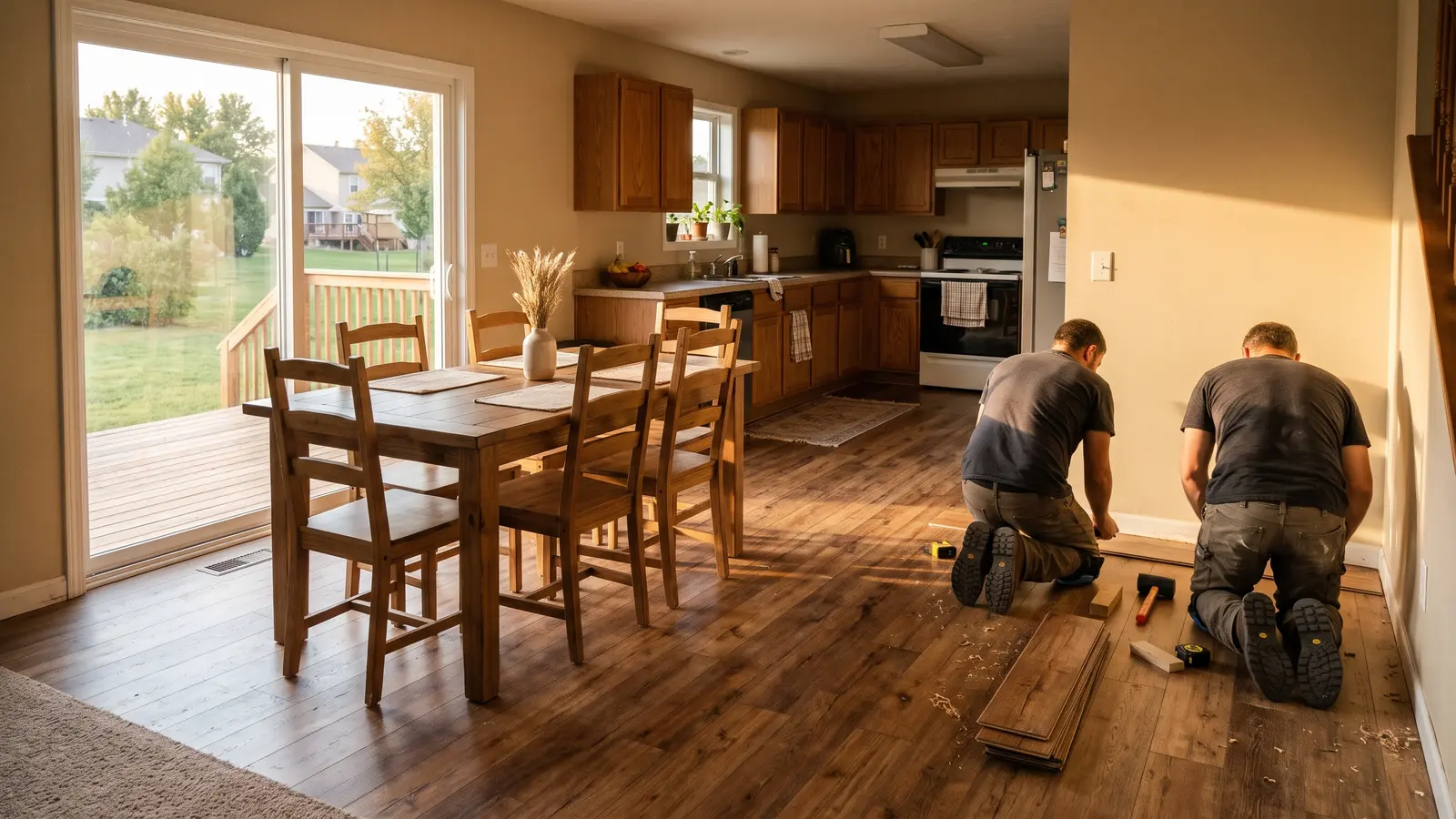
Refinishing wins on price in most cases. At $3 to $6 per square foot, it costs well under new hardwood installation at $8 to $15 per square foot. On 500 square feet, that’s roughly $1,500 to $3,000 to refinish versus $4,000 to $7,500 to replace.
Refinishing makes sense when:
- The boards are solid hardwood, or engineered with enough wear layer left
- Damage is mostly on the surface: scratches, dull finish, worn traffic paths, light stains
- The floor is still flat and doesn’t move or squeak much underfoot
Replacing makes more sense when:
- The floor has already been sanded so many times that tongues or nail heads show
- Large areas have water damage, rot or buckling
- It’s engineered flooring with a wear layer too thin to sand
- You want a different floor entirely, or a moisture-tolerant one for a basement
Solid hardwood usually allows three to five sandings over its life. Engineered hardwood depends on its wear-layer thickness. We check by pulling a floor vent or looking at a threshold edge where the board’s profile is visible. If you’re thinking about switching floor types altogether, see LVP vs. hardwood.
What about old Wichita oak hidden under carpet?
This comes up all the time. Many 1940s to 1960s homes in College Hill, Riverside, Crown Heights and Sleepy Hollow were built with oak strip flooring. Later owners covered it with wall-to-wall carpet, and a lot of it is still there, protected and in better shape than people expect.
When we pull back the carpet, here’s what we usually find:
- Tack strip holes around the edges of each room. These get filled and blend in once finished.
- Staples from the pad, sometimes hundreds of them. They all have to come out before sanding.
- Pad residue stuck to the finish. Sanding takes it off.
- Pet stains. Light ones often sand out. Deep black stains have soaked into the wood and usually mean replacing those boards.
- A patched spot where a wall or heat register used to be.
Before deciding anything, peel back a corner of carpet in a closet. If you see oak, it’s worth a quote.
Are there safety concerns in older homes?
A few, and they’re manageable. Homes built before 1978 may have lead paint on baseboards and trim. Sanding near painted trim, or removing it, needs care. Some older homes also have 9x9 vinyl tile in kitchens or basements, and that tile and its adhesive can contain asbestos. We test or arrange testing before disturbing suspect old flooring.
Is there a cheaper option than a full refinish?
If the finish is dull and lightly scratched but nothing has worn through to bare wood, a screen and recoat may be enough. Instead of sanding to raw wood, we lightly abrade the existing finish and add a fresh topcoat. It costs less than a full refinish, takes less time, and doesn’t use up any of the wood’s sanding life. It won’t fix deep scratches, gray worn traffic paths or stains, and it won’t change the color. Floors that have been waxed or treated with some cleaning products may not take a new coat well, so we test a spot first.
Can you refinish or install hardwood yourself?
Some homeowners do. Renting a drum sander is easy, but it removes wood fast, and one pause in the wrong spot leaves a dip you’ll see in every reflection. Since solid hardwood only allows a limited number of sandings, a mistake costs part of the floor’s life. Installing new hardwood yourself is possible too, but nail-down hardwood takes a flooring nailer, careful layout and moisture checks.
What should I put down before installing hardwood?
Over a wood subfloor, nail-down hardwood usually goes over an underlayment paper or felt that helps with squeaks and slows moisture movement. Over concrete, the plan changes: solid hardwood doesn’t belong on a below-grade slab, and engineered products need the right moisture barrier. The subfloor should be flat, dry and firmly fastened first.
Does Wichita weather affect refinishing?
It can. Kansas has humid summers and dry, cold winters, so wood floors expand and shrink with the seasons. You’ll often see thin gaps between boards in January that close up by July. We usually don’t fill normal seasonal gaps, because filler can crack when the wood moves. Keeping indoor humidity steady helps any wood floor, and finish dries more predictably in a home with moderate temperature and humidity.
How do you get a real refinishing price?
We look at the floor in person, check thickness and condition, and talk through stain and finish choices. You get a free written, itemized quote, with repairs, stairs and removal on separate lines, before work starts. For other floor types, see our Wichita flooring cost guide, or learn more about hardwood floor refinishing. Call (316) 252-2251 or request a free quote.