How long does flooring installation take?
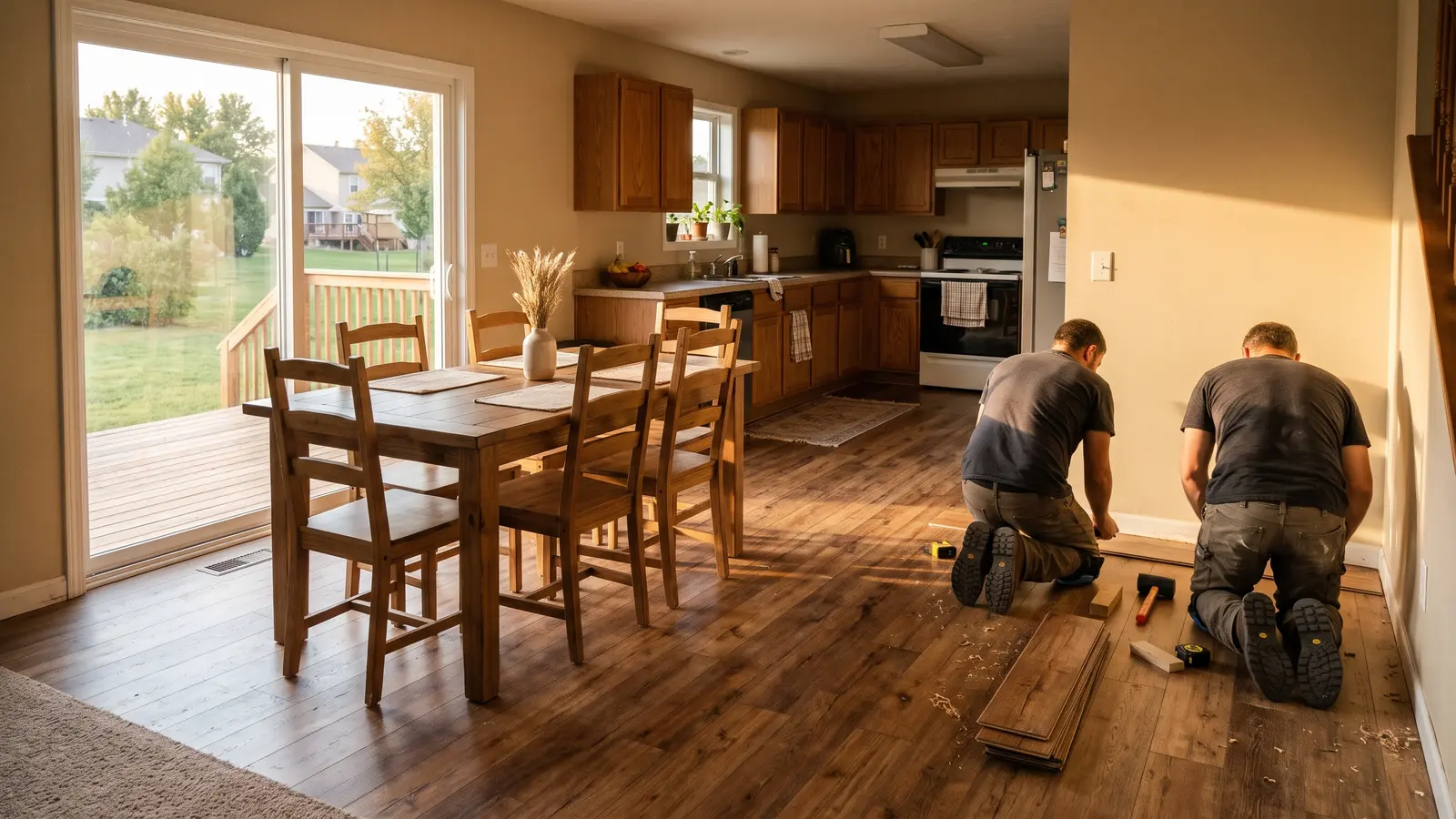
For most Wichita homes, the actual install takes one to three days. The full timeline is longer, because it includes a few steps before and after the install crew shows up. Here’s the usual order:
- Free in-home measure and written quote
- Material ordered or picked up
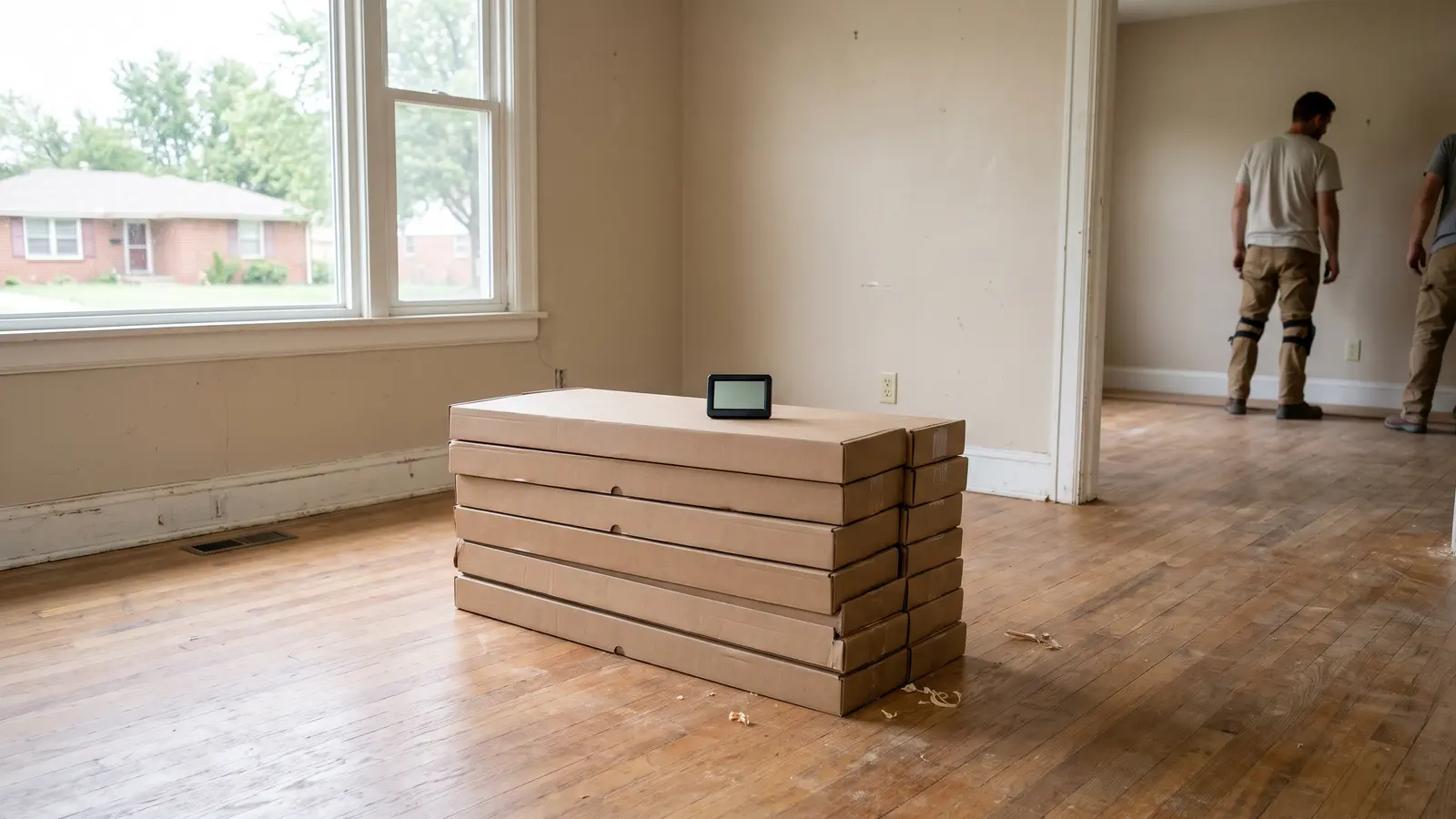
- Acclimation in your home (for many products)
- Removal of old flooring
- Subfloor prep and leveling
- Installation
- Trim, transitions and cleanup
- Dry or cure time (tile grout and refinishing)
How long does flooring need to acclimate?
Acclimation means letting the flooring sit in the house so it adjusts to your indoor temperature and humidity. It matters more here than in a lot of places. Kansas summers are humid and winters are cold and dry, so wood products expand and shrink with the seasons. A hardwood floor installed before it adjusts can gap in winter or cup in summer.
Typical guidance:
- LVP and laminate: many makers call for about 48 hours in the room, boxes laid flat. Some rigid-core LVP lines say acclimation isn’t required. Follow the instructions for your product.
- Solid hardwood: often several days or longer. We check the wood’s moisture against the subfloor rather than going by days alone.
- Engineered hardwood: usually less than solid, but still per the maker’s guidance.
- Carpet and tile: no real acclimation needed.
Keep the heat or air running at normal settings during acclimation.
How long does removing old flooring take?
| Old floor | Typical removal time |
|---|---|
| Carpet and pad | a few hours for most homes |
| Floating LVP or laminate | a few hours |
| Glued sheet vinyl | half a day to a day |
| Ceramic tile | one to two days |
| Glued or nailed hardwood | one to two days |
Older homes can add a step. Some 1950s and 1960s homes have 9x9 vinyl tile, and that tile and its adhesive can contain asbestos. We test or arrange testing before disturbing it, which can add a few days for lab results. Homes built before 1978 may also have lead paint on trim, which affects how baseboards come off.
How long does subfloor prep take?
Leveling a few low spots with patching compound might take a few hours plus drying time. Replacing water-damaged plywood near a toilet or dishwasher can take most of a day. Subfloor repair is where surprises show up, so we look before we quote. If a job involves structural subfloor or joist work, we check with the Metropolitan Area Building and Construction Department (MABCD) before starting.
How long does installation take by floor type?
| Floor | Install time for about 500–1,000 sq ft | Use the floor |
|---|---|---|
| Carpet | about 1 day | right away |
| LVP | 1–2 days | right away |
| Laminate | 1–2 days | right away |
| Hardwood, prefinished | 2–3 days | right away |
| Hardwood, site-finished | 3–5 days plus finish dry time | after finish dries |
| Tile | 2–5 days | after grout cures, often 24–72 hours |
Stairs, lots of doorways, diagonal or herringbone layouts and moving furniture all add time.
How long does hardwood refinishing take?
A typical hardwood refinishing job takes three to five days from first sanding to final coat. Sanding takes a day or so. Stain needs to dry before finish goes on. Then each coat needs drying time before the next.
After the last coat, cure times are roughly:
- Water-based finish: light sock-foot traffic in about a day, furniture in a few days, rugs after a couple of weeks or more.
- Oil-based finish: light traffic after a day or two, furniture after several days, rugs after about a month.
Finish keeps hardening for weeks. These times vary by product and by humidity in the house, so we give you the exact times for the finish we use. Our refinishing cost guide has more.
What is the “rule of 3” for flooring?
It’s a design guideline, not a hard rule: try to keep no more than about three different flooring types or colors visible on one level. For example, LVP through the main living area, tile in the bathrooms, and carpet in the bedrooms. Beyond three, a house can start to feel chopped up. It’s a useful check when you’re replacing floors one room at a time.
What is the 1/3 offset rule?
When laying planks or rectangular tiles, stagger each row by no more than about one third of the piece’s length. With long tiles, this keeps slight bowing in the tile from creating lippage (edges that sit higher than their neighbors). With planks, it avoids a repeating stair-step look. Many tile and plank makers specify their own offset, which we follow.
What are 10 common mistakes when installing flooring?
- Skipping acclimation. Wood products gap, cup or buckle.
- Not leveling the subfloor. Click-lock joints flex and separate, and tile cracks.
- No expansion gap. Floating floors need room to move at walls, or they lift.
- Wrong underlayment. Doubling up pad under LVP with attached pad, or skipping vapor barrier where it’s required.
- Ignoring basement moisture. Wichita basements need a moisture check and a floor that tolerates it.
- Poor transitions. Mismatched heights at doorways become trip spots.
- Ordering too little. Plan on 5% to 10% extra, more for diagonal or herringbone.
- Not mixing boxes. Pulling from several boxes at once avoids blotchy color.
- Leaving door jambs uncut. Cutting jambs lets the floor slide underneath cleanly.
- Disturbing old flooring without testing. Old 9x9 tile and adhesive should be tested first.
How can you keep the project on schedule?
A few things on your side make a real difference:
- Pick your flooring early. Special-order products can take longer to arrive than stocked ones.
- Have the material on site before install day if you’re buying your own, so it has time to acclimate.
- Clear the rooms. Small items, closets and anything on the floor should be out of the way.
- Plan for appliances. Kitchens and laundry rooms need the fridge, range or washer moved.
- Decide on trim and transitions up front. Last-minute changes can mean another trip.
When should you schedule?
Installer schedules are usually more open in winter, and retailers often run sales around holidays and late winter. We can’t promise a start date, but calling early gives you more options. For pricing, see our Wichita flooring cost guide. Call (316) 252-2251 or request a free quote.